Kawaii World Coloring Pages for Kids: Beyond Cute, A Design Asset
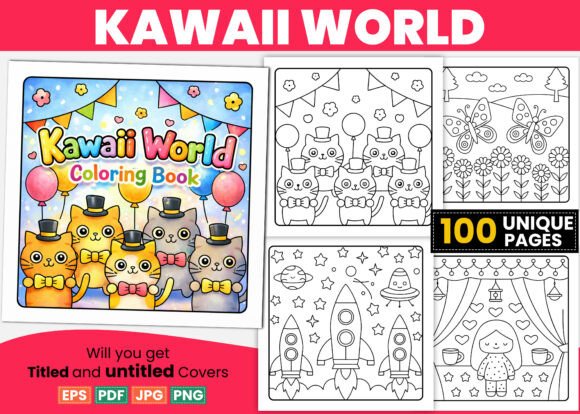
When we talk about Kawaii World Coloring Pages for Kids, we're not just discussing a set of simple drawings. We're looking at a curated visual language, a specific style of illustration that has massive appeal far beyond its target audience of young artists. The core of this collection lies in its bold, unambiguous lines and charmingly simplified forms. These aren't complex, shaded illustrations; they are clean, high-contrast designs built for interaction. The personality is one of pure, approachable joy—rounded shapes, expressive faces on everyday objects, and a lack of intimidating detail. This style taps into a universal appreciation for the cute and the friendly, making it an incredibly versatile asset in your creative toolkit.
The Strategic Appeal of Simplified Illustration
The visual characteristics of the Kawaii World Coloring Pages for Kids are their greatest strength. The bold outlines ensure that even the youngest colorists can stay within the lines, but this same clarity translates perfectly to professional applications. In branding, for instance, a simplified, character-driven illustration style can make a brand feel more human, accessible, and memorable. Think about how a friendly mascot or a set of custom icons can elevate a logo design or a social media presence. The consistent style across the 100 designs provides immediate visual cohesion, a principle that is fundamental to building a strong brand identity.
This collection functions as more than just a coloring book interior. It's a library of design assets. The included EPS and PNG files with clean backgrounds are ready to be integrated into a myriad of projects. For a small business owner creating packaging for a children's product, these illustrations can become whimsical spot graphics. A content creator can use them as engaging visuals for blog posts or YouTube thumbnails. The style is inherently "thumb-stopping" on social media graphics, where clarity and immediate emotional appeal are paramount. It’s a creative font for the visual world—communicating a specific mood without a single word.
Practical Applications for Entrepreneurs and Creators
Let's move from theory to practice. How does one actually leverage a resource like the Kawaii World Coloring Pages for Kids? The answer lies in viewing it as a foundational element for larger projects. The most direct path is, of course, publishing. The files are delivered in formats (like PDF interior and high-resolution EPS) that are directly compatible with platforms like Amazon KDP. You have the interior ready, and the bonus book cover images provide a professional starting point for your exterior design, saving hours of initial setup.
Beyond the coloring book itself, consider these applications:
- Digital Products: Use individual illustrations as digital stickers for planners, elements for printable party kits, or assets for educational worksheets.
- Merchandise: The designs are perfect for print-on-demand products like t-shirts, tote bags, and mugs where a cute, bold graphic is desirable.
- Editorial and Web Design: Break up text-heavy pages with charming inline illustrations. They can serve as custom bullet points, section dividers, or sidebar graphics that add personality without overwhelming the content.
- Brand Collateral: A bakery could use these cute food characters on their menus and loyalty cards. A pet groomer might adapt the animal faces for their appointment cards. The applications are limited only by the need for a friendly, approachable aesthetic.
The key is to see the illustrations not as finished pages, but as modular components. A single character can be extracted, scaled, and combined with other elements to create something entirely new. This flexibility is what transforms a simple coloring page set into a valuable component of your design assets library, supporting everything from web design to packaging design.
Integrating Kawaii Style into Your Design Workflow
Adopting the kawaii aesthetic requires more than just plopping a cute character onto a project. It demands thoughtful integration to maintain professionalism. The first step is always evaluation: does this playful, youthful style align with your project's goals and your audience's expectations? For a legal firm, probably not. For a family-friendly event, a children's app, or a brand targeting millennials with a nostalgic bent, it could be perfect.
When incorporating these illustrations, pay close attention to your overall visual hierarchy. The bold, simple lines of the kawaii drawings have high visual weight. They will naturally draw the eye. Use this to your advantage to guide the viewer's attention to key information or calls to action. Pair them with a clean, modern typography system—perhaps a straightforward sans serif font for body text—to ensure readability and create a pleasing contrast between the playful graphics and the professional layout.
Think about color palette as well. The black-and-white line art is a blank canvas. Developing a consistent color scheme for your project and applying it to the illustrations will create a unified, professional look. This practice mirrors how a designer would use a premium font: they don't just use the default, they style it to fit the brand. Similarly, you're not just using a default coloring page; you're styling a core illustration to become an integral part of a larger brand identity system. The result is a project that feels cohesive, intentional, and full of character.