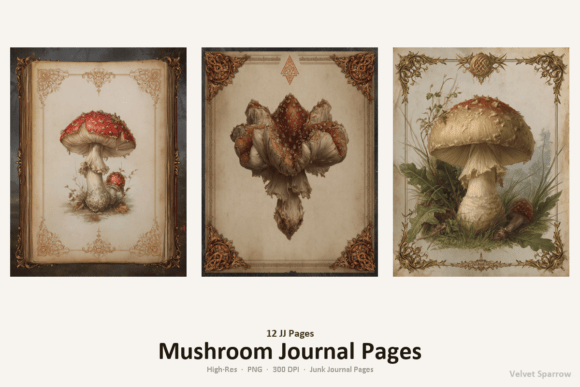
Mushroom Journal Pages: Layered Textures for Authentic Projects
Finding design assets that offer genuine texture rather than just a flat visual can be a challenge. When you are building a brand or a personal art project, the difference between a generic background and one with tactile depth is significant. Mushroom Journal Pages serves as a solution for creators who need that authentic, "lived-in" aesthetic. This collection is not just a set of digital files; it is a versatile toolkit designed to mimic the physical properties of vintage paper and mixed-media art. It bridges the gap between digital convenience and the charm of handmade stationery.
The Versatility of Kraft and Vellum
The true strength of these pages lies in their adaptability. We often think of digital assets as static, but Mushroom Journal Pages was engineered to interact with different print mediums. The file remains constant, but the output changes drastically depending on your paper stock. Printing on kraft paper, for example, mutes the colors and enhances the earthy, vintage textures, making it ideal for rustic brand identity work or nature-themed scrapbooking. Conversely, printing on vellum creates a translucent, ethereal layering effect perfect for editorial design or delicate overlays in mixed media.
This flexibility makes it a premium font alternative for background design. While a serif font or sans serif font dictates readability, these pages dictate the mood. The high-resolution 300 DPI ensures that the aged details and vintage textures hold up even when scaled. Whether you are creating a logo design that needs a textured backdrop or packaging design for an artisanal product, the ability to control the final look simply by changing the paper is a powerful creative advantage.
Practical Applications for Modern Creators
Understanding where to use Mushroom Journal Pages is key to maximizing their value. For the digital creator, these pages offer a distinct departure from the clean, vector-based aesthetics that dominate web design and social media graphics. In a sea of polished, corporate feeds, the organic imperfections of these journal pages provide a human touch that fosters audience engagement. They work exceptionally well as backgrounds for quote graphics or as frames for photography, adding a layer of storytelling to the visual content.
For the hands-on crafter, the applications are even more direct. They are designed to function as junk journal signatures, allowing you to build entire booklets with a cohesive, vintage feel. However, don't limit yourself to journals. Consider using them in altered book projects or as planner dashboard inserts. The "mix of page styles" mentioned in the file description means you can layer these elements. You might use a solid textured page as a base and a more intricate design as a foreground accent, creating a visual hierarchy that guides the viewer's eye naturally.
Integrating Texture with Typography
One of the most common pitfalls in design is pairing the wrong typography with a textured background. When working with Mushroom Journal Pages, your choice of typeface is critical. Because the pages feature intricate details and vintage textures, a highly ornate script font or handwritten font can sometimes get lost in the noise. Instead, consider pairing these textured backgrounds with a clean, bold sans serif font to create contrast. This ensures your message remains legible while the background provides the atmosphere.
For example, if you are designing a menu for a farm-to-table restaurant, the mushroom theme fits perfectly. Using a sturdy, modern typography style for the headers ensures the menu items are readable, while the journal page background sets the rustic tone. This approach applies to creative font pairings as well. A display font used for a title might look stunning, but the body text needs to be simple. The pages act as the canvas, so the typography should not compete with it but rather complement it, ensuring the visual hierarchy remains clear.
Evaluating Fit and Commercial Use
When deciding if these assets fit your project, look beyond the immediate subject matter. While the theme is botanical, the textures—aged paper, stains, and grain—are universal. These are excellent design assets for small business owners creating packaging design for coffee, tea, or artisanal goods. The aesthetic communicates quality and care, influencing brand perception before the customer even reads a word.
From a practical standpoint, testing is essential. Before committing to a large print run for a memory keeping project or a commercial catalog, print a single test page. Observe how the ink interacts with your chosen paper. Does the kraft paper absorb too much ink, blurring the details? Does the cardstock hold the color vibrancy? This step is crucial for maintaining professionalism in your final product.
Finally, consider the scope of your project. As part of a larger collection ("Chronicles of the Old Kingdom"), these pages offer the potential for consistency across a series of works. If you are a blogger or publisher looking to create a cohesive look across multiple volumes or posts, having access to a library of coordinating textures ensures your brand identity remains recognizable. Whether for personal art journal layers or commercial mixed media projects, these pages provide the structural foundation for creative work that feels grounded and real.